Korea North Korean threats are back in the news lately – this time following the attack on a South Korean naval vessel that cost 46 lives. Many have noted that this is significantly more aggressive than their usual verbal threats, but even if they are willing to risk war it is not the thing that they really want.
Context – all about the weather
The geography and climate of the peninsula is important to understanding the way Korea originally evolved prior to the arbitrary seperation along the 38th parallel:
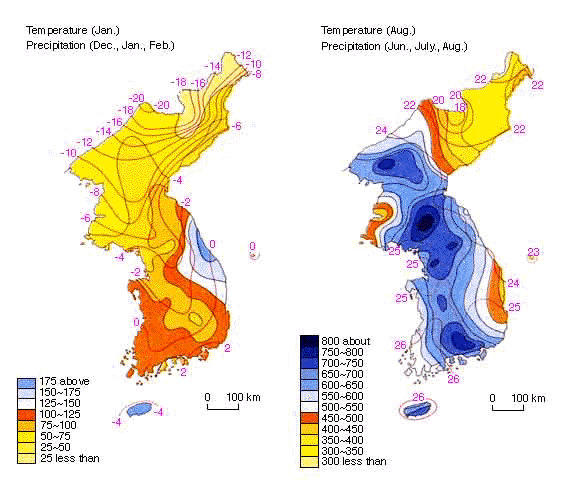 So while the two states are close in proximity, their environments are worlds apart. The south has fertile flood plains, rolling hills, and lots of good fishing – the north has desert, mountains, and very little agricultural land.
Historically, it made sense for these regions to be united. Due to the long border with 8 million people there are currently at risk from a lack of nutrition.
Meanwhile, the nuclear testing conducted over the last few years has backfired in a spectacular way: instead of drawing in tribute from fearful neighbors, it has reduced the amount of food that rich western states are willing to donate to an increasingly unstable regime. In fact, the food aid is dwindling in real time and supplies will run out within the month of June unless something changes.
Stuck between starvation and war
Kim Jong Il isn’t a very mentally well-balanced or physically healthy leader. Or he might be dead and impersonated by a puppet for the benefit of some shadowy cabal that needs an icon the people recognize and fear. Whatever the truth might be, the son he’s chosen to succeed him isn’t exactly going to inspire confidence in anyone. The bottom line is that there isn’t a whole lot holding this society together at the moment, and if the outside sources of food dry up there would be multiple humanitarian disasters breaking out all at once: the deaths by starvation, and the inevitable military crackdown on a population with nothing left to lose from revolt.
The alternative doomsday scenario, of course, is war. And at some point, war does become the best choice for North Korea if they are forced to choose between an offense against the south and famine & internal implosion. War might be a 99% chance of loss, but there is a 100% chance that they won’t produce enough food to sustain their population.
If the tone regarding talk of North Korea is different this time, it is because there are a few extra factors adding stress to an already desperate situation. While it is impossible to return to the pre-nuclear status quo of food aid in response to aggressive language, a failure to support the nutritional needs of the North will soon lead to mass death one way or the other.